BLOG: FOLLOWING THE MONEY BENEATH THE WAVES
Following the Money Beneath the Waves:
Why Marine Conservation Fraud Is a Financial Crime

Imagine a compliance officer at a major South African retailer approving a shipment of premium, sustainably certified wild-caught fish. The documentation appears legitimate. The pricing aligns with market expectations, and the supplier passes routine compliance checks. Yet behind the paperwork lies a different reality: the fish may be farmed tilapia or have been illegally harvested, the sustainability certification forged, and the proceeds channelled through complex financial structures designed to conceal the origins of the catch.
This scenario closely reflects fraud schemes documented by international organisations and enforcement agencies. It illustrates an important reality: fraud involving marine resources is no longer simply an environmental issue. It is increasingly a sophisticated financial crime that relies on many of the same techniques used in corruption, money laundering, trade-based financial crime and organised fraud.
At the ACFE SA, we believe this is precisely why marine conservation fraud deserves greater attention from fraud examiners, forensic investigators and compliance professionals. Fraud continues to evolve beyond traditional financial misconduct. Increasingly, organised criminal networks exploit global supply chains, environmental resources and international trade to conceal illicit financial flows. As financial crime continues to evolve, so too must the profession's understanding of where fraud occurs and how investigative expertise can be applied.
Beyond Species Substitution: A Complex Financial Crime Network
For many consumers, seafood fraud simply means paying for one species of fish and receiving another. While species substitution remains common, it represents only one aspect of a much broader criminal ecosystem.
The 2026 report by the Food and Agriculture Organization of the United Nations (FAO) identifies multiple forms of fraud affecting global fisheries and aquaculture supply chains, including document fraud, false sustainability claims, certification fraud, origin fraud and illegal harvesting. Together, these schemes enable illicit products to enter legitimate markets while disguising their true origin.
What makes these offences particularly significant for fraud professionals is not merely the deception itself, but the financial infrastructure that supports it. Fraudulent documentation, shell companies, manipulated trade transactions and concealed beneficial ownership all serve to transform illegally sourced products into seemingly legitimate commercial goods. These are well-established financial crime techniques that fall squarely within the investigative expertise of Certified Fraud Examiners (CFEs).
How Illegal Fishing Becomes Legitimate Business
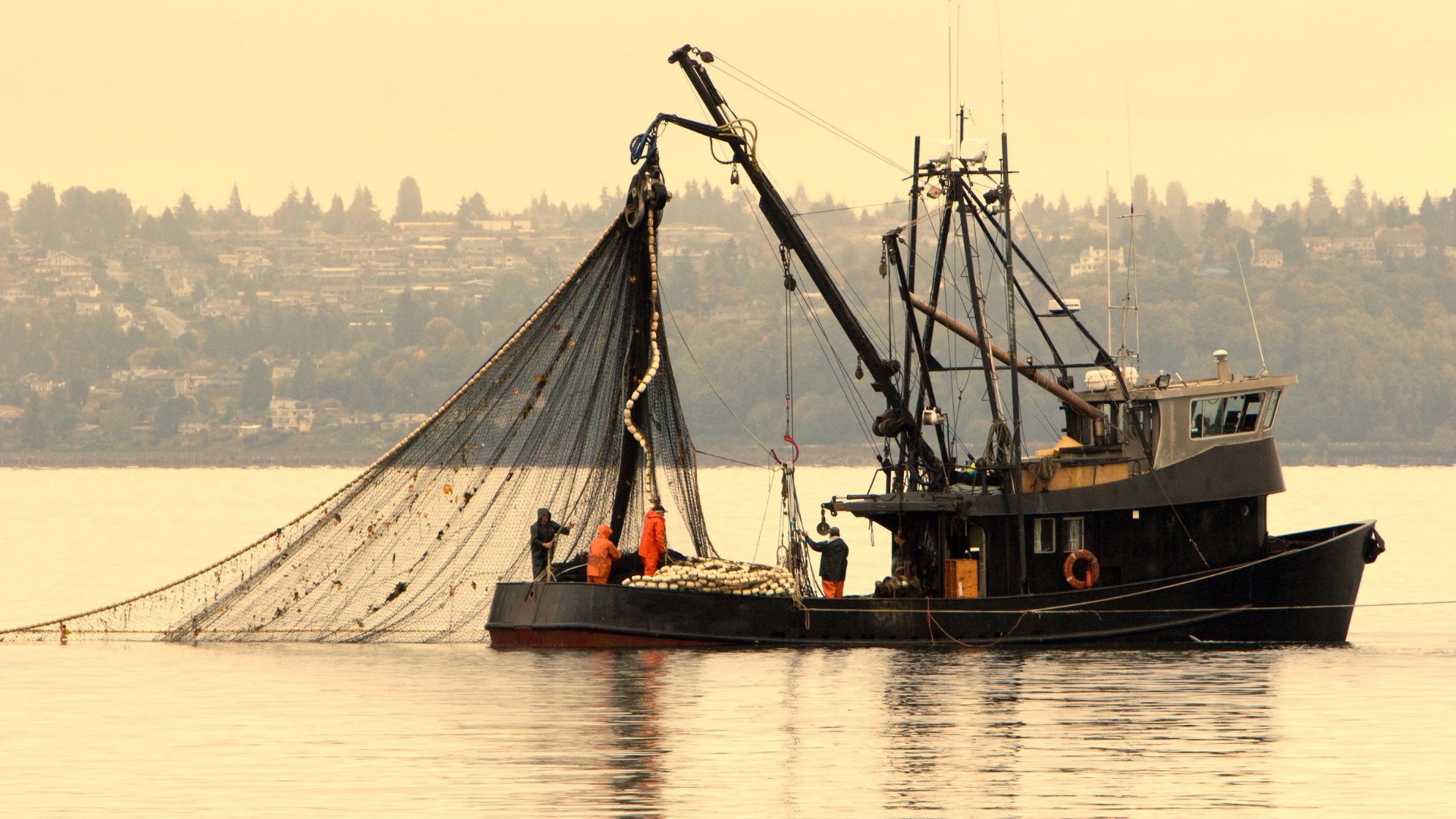
Illegal, Unreported and Unregulated (IUU) fishing is widely recognised as one of the world's most significant environmental crimes. Increasingly, however, international organisations also recognise it as a predicate offence for money laundering and other financial crimes.
According to the 2024 EU AML/CFT Global Facility, proceeds generated through IUU fishing are commonly introduced into the legitimate financial system through falsified documentation, manipulated trade transactions and complex ownership structures designed to obscure the true beneficiaries of the activity. These methods closely resemble the financial concealment techniques encountered in many other forms of organised crime.
For fraud examiners, the indicators are familiar. Inflated or understated invoices, inconsistent shipping documentation, complex cross-border ownership arrangements, and unexplained pricing anomalies all represent red flags requiring further investigation. The investigative methodologies already exist; what is changing is the range of industries in which they must now be applied.
Why This Matters for Africa
Africa sits at the centre of this challenge.
According to the Financial Transparency Coalition, approximately 48.9% of identified industrial vessels linked to illegal fishing operate in African waters, with a significant concentration along the West African coastline. The organisation further estimates that illicit financial flows associated with IUU fishing cost developing African countries as much as USD 11.49 billion each year. To place that figure into perspective, Africa's fisheries sector contributes an estimated USD 24 billion annually to the continent's economy, illustrating the substantial economic impact of these criminal activities.
South Africa is not insulated from these risks. The country's ongoing reforms following its Financial Action Task Force (FATF) greylisting have placed renewed emphasis on strengthening anti-money laundering controls, improving complex financial crime investigations and enhancing prosecutions involving trade-based money laundering. Marine conservation fraud increasingly intersects with each of these priorities.
Academic research also highlights several systemic factors that enable IUU fishing across Africa, including weak regulatory oversight, corruption, fragmented enforcement and limited regional coordination. These are not solely environmental governance issues — they represent broader failures in financial integrity that demand the attention of forensic investigators, auditors and compliance professionals.
The Cost of Fraud Extends Beyond Financial Loss
Marine conservation fraud has consequences that extend well beyond individual financial losses.
When illegally harvested seafood enters legitimate supply chains through fraudulent documentation, compliant businesses are placed at a competitive disadvantage. Organisations that invest in sustainable sourcing, regulatory compliance and responsible fisheries management are forced to compete against operators who avoid these costs through deception.
The environmental consequences are equally significant. Fraudulent certification and misrepresented product origins allow illegally harvested seafood to bypass conservation controls, placing additional pressure on already vulnerable marine ecosystems. As fraud becomes more profitable, the incentives for illegal harvesting continue to grow, creating a cycle that harms legitimate businesses, coastal communities and marine biodiversity alike.
The Fraud Examiner's Role
The encouraging news is that the tools available to investigators continue to evolve.
The FAO highlights several emerging technologies that support enforcement efforts, including DNA testing, isotope analysis, digital traceability systems and satellite vessel monitoring. While these technologies strengthen product verification, they complement rather than replace traditional financial investigation.
For many fraud examiners, the investigation still begins with documentation.
Catch certificates, export permits, customs declarations, invoices, health certificates and shipping records provide the documentary trail that investigators know well. Inconsistencies between declared species, weights, values and shipping records may indicate broader fraud schemes requiring financial investigation.
As supply chains become increasingly global and interconnected, the ability to follow financial transactions alongside documentary evidence will become an increasingly valuable investigative capability.
An Emerging Area of Fraud Examination
Marine conservation fraud demonstrates how rapidly the fraud landscape is changing.
Historically viewed primarily as an environmental concern, it is now recognised as a complex financial crime involving trade-based money laundering, document fraud, beneficial ownership concealment and organised criminal networks. For CFEs, compliance professionals and forensic investigators, this represents an important opportunity to apply established investigative techniques within an emerging area of financial crime.
At the ACFE SA, we believe the profession has an essential role to play in strengthening financial integrity wherever illicit financial flows occur. Whether the proceeds originate from procurement fraud, corruption, cybercrime or environmental crime, the underlying investigative principles remain remarkably consistent.
By following the money, interrogating complex supply chains and exposing hidden financial networks, fraud examiners can help ensure that environmental crime is recognised not only as a conservation issue, but also as the serious financial crime it has become. As organised crime continues to evolve, so too must the professionals committed to detecting, investigating and preventing it.
Sources & References
Carver, E. (5 March 2026). Seafood fraud is rampant, imperiling fish populations, report finds. Mongabay Environmental News. news.mongabay.com
Food and Agriculture Organization of the United Nations & International Atomic Energy Agency (2026). Food fraud in the fisheries and aquaculture sector. FAO Report CD8244EN. openknowledge.fao.org | FAO news feature
Blue Life Hub (12 February 2026). FAO Special Report: Addressing Global Fish Fraud and Supply Chain Integrity. bluelifehub.com
Oceana USA. Conservation Impacts of Seafood Fraud. usa.oceana.org
Financial Transparency Coalition (2022, updated 2024). Fishy Networks: Uncovering the companies and individuals behind illegal fishing globally. financialtransparency.org
EU AML/CFT Global Facility (June 2024). Beneficial Ownership Transparency to address Illegal, Unreported, and Unregulated Fishing. global-amlcft.eu (PDF)
Simataa et al. (2025). Illegal, Unreported and Unregulated (IUU) Fishing in Africa: A Systematic Review. Aquaculture, Fish and Fisheries, Wiley. onlinelibrary.wiley.com
FATF (November 2024). South Africa's progress in strengthening measures to tackle money laundering and terrorist financing, Follow-Up Report. fatf-gafi.org
Sturgeon, J. (24 February 2026). One in Five Fish Products Tied to Fraud. Inside Climate News. insideclimatenews.org
Lawrence, S. & Elliott, C. (2024). Food fraud threats in UK post-harvest seafood supply chains. npj Science of Food. pmc.ncbi.nlm.nih.gov